UAE Bank IBAN Check 2027: Complete Guide to Verify IBAN In UAE
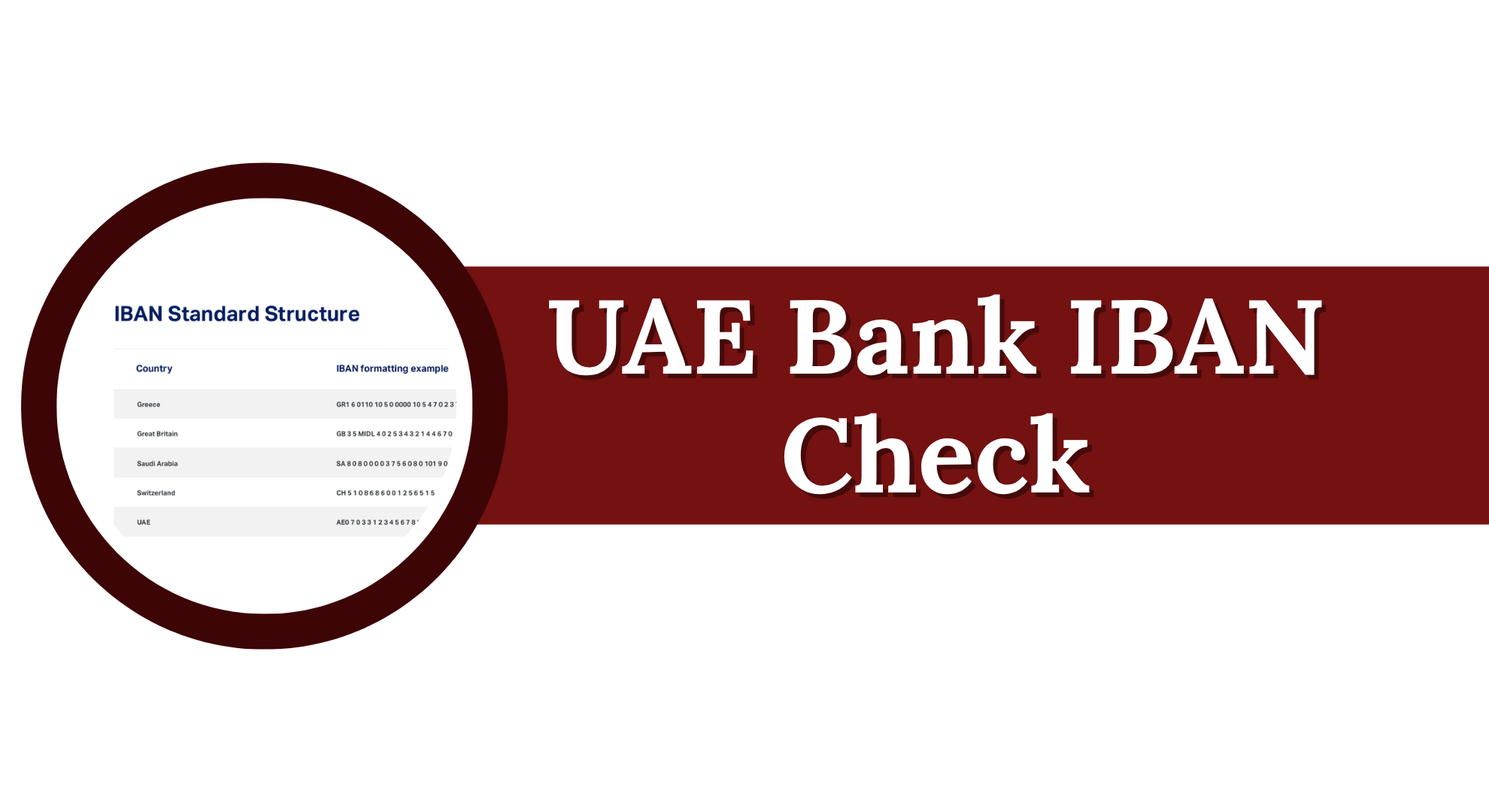
UAE Bank IBAN Check 2027. Sending money to a friend, paying a bill or getting your salary in the UAE all depend on one small but powerful code: your IBAN. Most people use their IBAN every month without knowing what it really means or why banks are so strict about it. This guide breaks down everything about the UAE Bank IBAN check in plain, easy words no banking jargon, no confusion, just clear facts you can actually use.
By the end of this guide, you will understand what an IBAN means, why it was introduced in the UAE, how it is structured, how to verify it, and how to avoid costly mistakes when making international transfers.
Check IBAN
Type it in here and we’ll tell you if it’s the right format.
How to Use this IBAN TooL?
Here are some steps:
- Enter Your IBAN: Enter your full IBAN with or without spaces.
- Click “Check IBAN”: Click the button to validate the IBAN.
- View the Result: Green: means valid; red: shows the error.
- Confirm with Your Bank: Verify the IBAN with your bank before making a payment.
Disclaimer: This tool checks only the IBAN format and checksum. Always verify your IBAN with your bank before making any transaction.
What Is an IBAN?
IBAN stands for International Bank Account Number. It is a special code that follows a global rule called the ISO 13616 standard. Think of it as a passport number for your bank account — it identifies your account in a way that banks all over the world can recognize and trust.
An IBAN is not a random string of numbers. It is built using a fixed pattern that includes your country, your bank, your branch, and your personal account number. Because every part of the IBAN follows a set formula, banks can quickly check whether it is real or fake before any money moves.
Read Also: First Abu Dhabi Bank Swift Code: Complete Guide to Every Branch Code In UAE
Why Does the UAE Use IBAN Numbers?
Before IBAN, every bank had its own way of writing account numbers. This caused a lot of confusion, especially for international payments. A single missing digit could send someone’s hard-earned money to the wrong account.
To fix this problem, the UAE adopted the IBAN system so that:
- Payments inside the country move faster and with fewer errors.
- Payments coming from other countries can be checked and verified instantly.
- Every bank account, no matter which bank issued it, follows the same easy-to-check format.
This system gives everyone — banks, businesses, and regular customers — more confidence that their money will reach the right place. The confidence comes from two things working together: a globally accepted numbering standard, and a built-in mathematical way of checking whether the number is accurate.

Who Is Allowed to Create Your IBAN?
Here is something many people do not know: you cannot create your own IBAN, and neither can any outside company. Only licensed banks operating in the UAE that handle electronic payments are allowed to generate an IBAN for their customers.
This rule exists for a simple reason safety. If anyone could create an IBAN, fraudsters could easily produce fake numbers and trick people into sending money to the wrong place. By keeping this power only with regulated banks, the UAE keeps the whole payment system safe and trustworthy.
So, when you open a bank account in the UAE, your bank automatically creates your IBAN and shares it with you. You do not need to apply for it separately or pay any extra fee.
A few simple points to remember about IBAN ownership:
- Your IBAN is created directly by your bank, not by any third-party app or website.
- No outside agent or service is legally allowed to generate one for you.
- Every account you hold gets its own unique IBAN, even if all your accounts are at the same bank.
Do You Really Need an IBAN?
Yes, if you send or receive electronic payments in the UAE or from abroad, you need an IBAN. It does not matter if you are:
- Receiving your monthly salary
- Paying rent through a bank transfer
- Sending money to family in another country
- Running a business that deals with local or international clients
Every one of these situations requires a valid IBAN. And here is an important detail: if you have more than one bank account, each account gets its own separate IBAN. You cannot use one IBAN for multiple accounts, even if they belong to the same person at the same bank.
A Quick Look Back: When Did the UAE Start Using IBAN?
The UAE officially switched to the IBAN format on November 19, 2011. Before this date, customers used their normal account numbers for transactions, and each bank followed its own internal numbering style.
On that date, a major shift happened across the entire banking sector. Every existing account number was automatically converted into the new IBAN format. Banks did not leave customers guessing — they informed each account holder about their new IBAN directly.
From that day forward:
- All account numbers began following the IBAN structure.
- Banks started printing the IBAN directly on customer bank statements, both paper and digital.
- Any payment processed after this date needed to use the IBAN format for accuracy.
So, if you have had a UAE bank account since before 2011, your original account number is still part of your IBAN it is just wrapped inside a longer, standardized code now. This change was made to bring the UAE banking system in line with global standards, making both local and international transactions smoother and more reliable.
Why Checking Your IBAN Matters So Much
You might wonder, “Why not just type the account number and send the money?” The answer is simple: mistakes are expensive, and international transfers are not easy to reverse once they are sent.
An IBAN check works by looking at special control digits built into the number. These digits act like a built-in error detector. Before a payment is even sent, the system checks these digits to confirm that:
- The IBAN has the correct length for that country.
- The bank code inside the IBAN actually exists.
- The number as a whole passes the mathematical checksum test.
This single check can catch typing errors, missing digits, or completely fake numbers before they cause a failed or delayed payment. For both individuals and businesses, this small step can save a lot of time, money, and stress.

The Main Benefits of IBAN Validation
- Reduces failed transactions – Both local and international payments are checked before processing, lowering the risk of failure.
- Saves time – Instead of waiting days to find out a transfer failed, errors are caught instantly.
- Prevents wrong transfers – Stops money from accidentally going to the wrong account due to a typing mistake.
- Builds trust – Businesses and individuals can rely on the system, knowing that IBANs are checked for accuracy before use.
What Is a BIC Code and How Does It Work With IBAN?
Along with the IBAN, banks also use something called a BIC code, short for Bank Identifier Code (sometimes also called a SWIFT code). While the IBAN tells the system which account to pay, the BIC code tells the system exactly which bank and branch should receive the payment.
When you combine a valid IBAN with the correct BIC code, the payment routing becomes extremely accurate. This combination is especially useful for international transfers, where money often passes through several banking systems before reaching its final destination.
A good IBAN checker tool does not just confirm the IBAN it can also identify the matching BIC code for the bank and branch linked to that account. This gives you a complete picture and reduces the chance of your payment getting stuck or bounced back.
How Does an IBAN Checker Actually Work?
An online IBAN checker does the same job that big banks and payment companies use in their own systems — just in a simple, free, and easy-to-access way. Here is a straightforward breakdown of how the process usually works:
Step 1: Enter the IBAN Number
You type or paste the full IBAN into the checking tool or your banking app.
Step 2: The System Reads the Country Code
The tool identifies the country based on the first two letters. For the UAE, this will always be “AE”.
Step 3: Check Digits Are Verified
The system runs a mathematical calculation on the check digits to confirm the IBAN follows the correct format for that country.
Step 4: Bank Code Is Identified
The next section of digits is matched against the list of registered bank codes in the UAE to confirm which bank the account belongs to.
Step 5: Account Number Is Validated
The remaining digits, which represent the actual account number, are checked to make sure they match the expected length and pattern.
Step 6: Result Is Displayed
The system tells you whether the IBAN is valid or not. If valid, it may also show you which bank and branch the account belongs to.
This entire process usually takes just a few seconds, giving you instant peace of mind before you send any money.
The Hidden Cost of Sending Money Through Your Bank
Here is something banks do not always tell you clearly: international transfers made directly through your bank can quietly cost you more than you expect, even when your IBAN is completely correct. There are usually two hidden costs:
1. A Poor Exchange Rate
Banks often add a hidden margin to the exchange rate, so you get less foreign currency than the real market rate. This difference, even if it looks small on paper, can add up to a noticeable amount, especially on larger transfers.

2. Extra, Unclear Fees
Some banks charge a flat transfer fee on top of the exchange rate margin, without always explaining it upfront. Together, these two costs can quietly eat into a good chunk of the money you are sending.
A Smarter Way to Send Money Abroad
If you want to avoid these hidden charges, it is worth looking at alternative services built specifically for international transfers, such as Wise (formerly known as TransferWise). Services like this are designed to be more transparent and often cheaper than traditional bank transfers.
Here is what makes this kind of service stand out:
- You get a fair exchange rate, close to the real market rate, along with a clear, upfront fee.
- Your money can move as fast as a bank transfer — and in many currency routes, even faster, sometimes arriving within minutes.
- Strong encryption and security measures are used to protect your money and your personal information during every transfer.
- Millions of customers around the world, over 15.6 million, already use these services to send money in more than 40 currencies, across more than 150 countries.
While your bank’s IBAN check ensures the payment details are accurate, choosing the right transfer service ensures you are not losing unnecessary money along the way. Before your next international transfer, it is worth comparing the total cost exchange rate plus fees between your bank and a dedicated transfer service. The difference can be surprising.
When Do You Actually Need to Use an IBAN?
If you are sending or receiving money across borders, especially with European banks, you will almost always need an IBAN. It has become the standard, trusted way to make sure funds reach the correct account without confusion.
More countries and banks around the world are adopting the IBAN system every year because it reduces errors and speeds up processing. That said, if you are transferring money to a country that has not fully adopted IBAN yet, you may need additional details, such as a local account number format or a specific routing code, alongside your IBAN.
IBAN and Salary Payments: The WPS Connection
In the UAE, the IBAN is not just used for personal transfers it plays a big role in how employees get paid. The UAE uses a system called the Wage Protection System (WPS) to make sure workers receive their salaries correctly and on time.
Employers use employees’ IBANs to process salary payments through WPS. This system was created to protect workers by making salary payments transparent and easy to track. If your IBAN details are incorrect or missing, it can delay your salary payment, so it is important to double-check this information with your employer and your bank.
For any employee, keeping your IBAN details updated with your HR department is just as important as keeping your personal contact details updated.
UAE IBAN Structure
A UAE IBAN always follows the same fixed structure, no matter which bank issued it. Understanding this structure makes it much easier to spot mistakes. Here is how it breaks down:
| Position in IBAN | What It Represents | Example Detail |
|---|---|---|
| Characters 1–2 | Country Code | Always “AE” for the United Arab Emirates |
| Characters 3–4 | Check Digits | A two-digit checksum used to verify accuracy |
| Characters 5–7 | Bank Code | A three-digit code identifying the specific bank (for example, a code specific to ADCB or ENBD) |
| Characters 8–23 | Basic Bank Account Number (BBAN) | A sixteen-digit number representing your actual account |
This gives every UAE IBAN a fixed total length of 23 characters. If your IBAN is shorter or longer than expected, that is usually the first clear sign that something is wrong with the number.
How to Generate a Valid Bank IBAN (Example: ADCB)
Some banks, like ADCB, allow customers to generate their IBAN online using their existing account number. Here is a simple step-by-step version of how this usually works:
- Find your original account number. This is usually a 12-digit or 14-digit number provided by your bank.
- Open the bank’s official IBAN generator page. Always make sure you are on the bank’s real, secure website.
- Enter your account number carefully. Double-check every digit before submitting.
- Submit the form to generate your IBAN. The system will automatically add the country code, check digits, and bank code.
- Save or note down your IBAN. Keep it somewhere safe, since you will need it for salary payments, transfers, and online banking setup.
A quick word of caution: always be careful when entering personal banking data online. Banks are usually clear that they are not responsible for any losses caused by incorrect information entered by the customer. So take your time and re-check every number before hitting submit.

Three Simple Ways to Verify Your UAE IBAN
You do not need to be a banking expert to verify your IBAN. Here are three easy methods anyone can use:
- Online IBAN Checker Tools Paste your IBAN into a trusted online validator. The tool will instantly check the length and the checksum digits to confirm whether the number follows the correct pattern for that country.
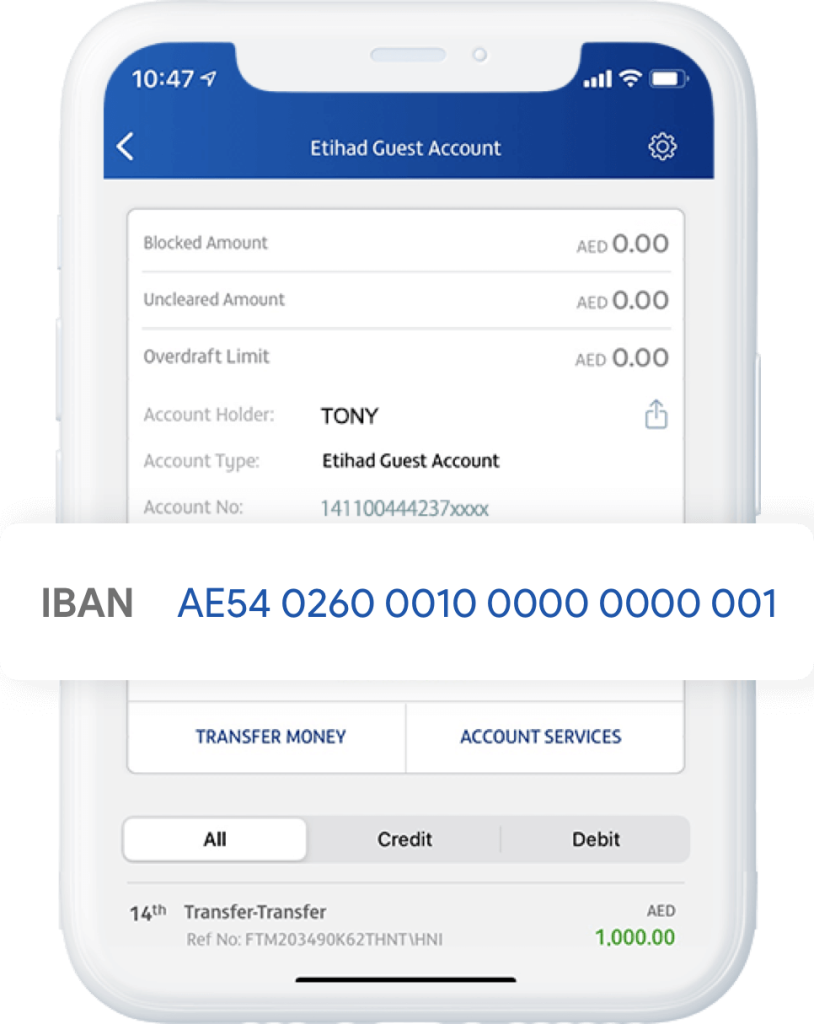
- Your Bank Statement Your IBAN is usually printed at the top of the first page of your bank statement, whether you view it online or receive a printed copy. This is one of the most reliable places to confirm your correct IBAN.
- Your Mobile Banking App Simply log into your UAE bank’s mobile app and go to your account details screen. Most banks display your full IBAN clearly here, making it easy to copy whenever you need it.
Using any one of these methods before an important transfer can save you from delays, failed payments, or sending money to the wrong place.
Situations Where an IBAN Check Makes a Real Difference
| Situation | Without an IBAN Check | With an IBAN Check |
|---|---|---|
| Sending salary payments | Risk of failed or delayed payments | Payments processed smoothly and on time |
| International transfers | Higher chance of misrouted funds | Accurate routing with BIC verification |
| Business bulk payments | Manual errors possible, harder to trace | Errors caught early, before processing |
| Personal transfers | Risk of sending money to the wrong account | Confidence that account details are correct |
Common Mistakes People Make With IBANs
Even with such a structured system, small human errors still happen. Here are a few common mistakes worth avoiding:
- Typing errors – missing a digit or swapping two numbers by mistake while entering a long 23-character number.
- Leaving out the country code – some people forget to add “AE” at the very start of the number.
- Using an old account number instead of the full IBAN – especially for international payments, where a plain account number is not enough.
- Copying an IBAN from an unreliable or outdated source – always copy your IBAN from your official bank statement or app, not from an old message, email, or document.
- Ignoring the check digits entirely – some people skip verification, assuming the number is correct just because it “looks right.”
Taking an extra thirty seconds to run a quick IBAN check can prevent a payment delay that might otherwise take days to fix.
Why This Matters for Businesses Too
It is not just individuals who benefit from checking IBANs. Businesses that pay suppliers, employees, or partners across borders deal with a much higher volume of transactions. A single incorrect IBAN in a batch of payments can cause:
- Delayed supplier payments, which can affect business relationships.
- Extra bank charges for failed or returned transactions.
- Time-consuming corrections and re-submissions that slow down operations.
Many businesses now build automated IBAN validation directly into their payment systems, so every transaction is checked before it is processed. This reduces manual errors, speeds up approval processes, and keeps financial operations running smoothly. For any business handling regular UAE or international transfers, using an IBAN checker as a standard step in the payment process is a smart and simple way to avoid unnecessary costs.
Tips to Keep Your IBAN Information Safe and Accurate
Here are some of these tips:
- Always get your IBAN directly from your bank statement or official banking app, not from an old document.
- Double-check the full 23-character number before sharing it with anyone.
- Avoid sharing your IBAN publicly on social media or other unsecured platforms.
- If your bank ever updates its coding system, confirm your current IBAN with your bank directly.
- Use a trusted IBAN checking tool before completing any important or large transfer.
FAQs About IBAN Check
What does IBAN stand for?
Ans: IBAN stands for International Bank Account Number. It is a globally recognized way of identifying bank accounts, built according to the ISO 13616 standard.
Can I create my own IBAN without going through my bank?
Ans: No. Only licensed banks in the UAE that handle electronic payments are authorized to generate an IBAN. No outside person, app, or company can create one for you.
How long is a UAE IBAN?

Ans: A UAE IBAN has a fixed structure and length of 23 characters: 2 letters for the country code, 2 digits for the check number, 3 digits for the bank code, and 16 digits for the account number.
What happens if I enter my IBAN incorrectly?
Ans: An incorrect IBAN can cause a payment to fail, get delayed, or in rare cases, be sent to the wrong account. This is why running an IBAN check before sending money is so important.
Do I need a separate IBAN for each bank account I own?
Ans: Yes. If you hold more than one account, whether at the same bank or different banks, each account will have its own unique IBAN.
Is my IBAN the same as my BIC or SWIFT code?
Ans: No. Your IBAN identifies your specific account, while your BIC or SWIFT code identifies the bank and branch. Both are often needed together for smooth international transfers.
Where can I find my UAE bank IBAN?
Ans: You can find it on your bank statement, inside your mobile banking app’s account details section, or through your bank’s online banking portal.
Why do UAE employers need my IBAN?
Ans: Your IBAN is used by your employer through the Wage Protection System (WPS) to process and track your salary payments accurately and on time.
Is it cheaper to send international money through my bank or through a transfer service?
Ans: It depends on the bank and the transfer service, but many dedicated transfer companies offer more transparent exchange rates and lower fees compared to traditional banks. It is always worth comparing both before sending a large amount.
Can IBAN be used for cheque or credit card payments?
Ans: No. IBAN is designed specifically for electronic fund transfers. It does not apply to cheque payments or credit card transactions.
Conclusion
The UAE Bank IBAN check might seem like a small technical detail, but it plays a big role in keeping your money safe and your payments smooth. From receiving your salary through WPS to sending money to family abroad, your IBAN is working quietly in the background every time you make a transfer.


About The Author